Case study · Learning Platform
Jago Akademi: six learning products behind one front door
Learning platform site for courses, events, and a corporate LMS
- Client
- Jago Akademi
- Year
- 2025
- Sector
- Education · Online Learning
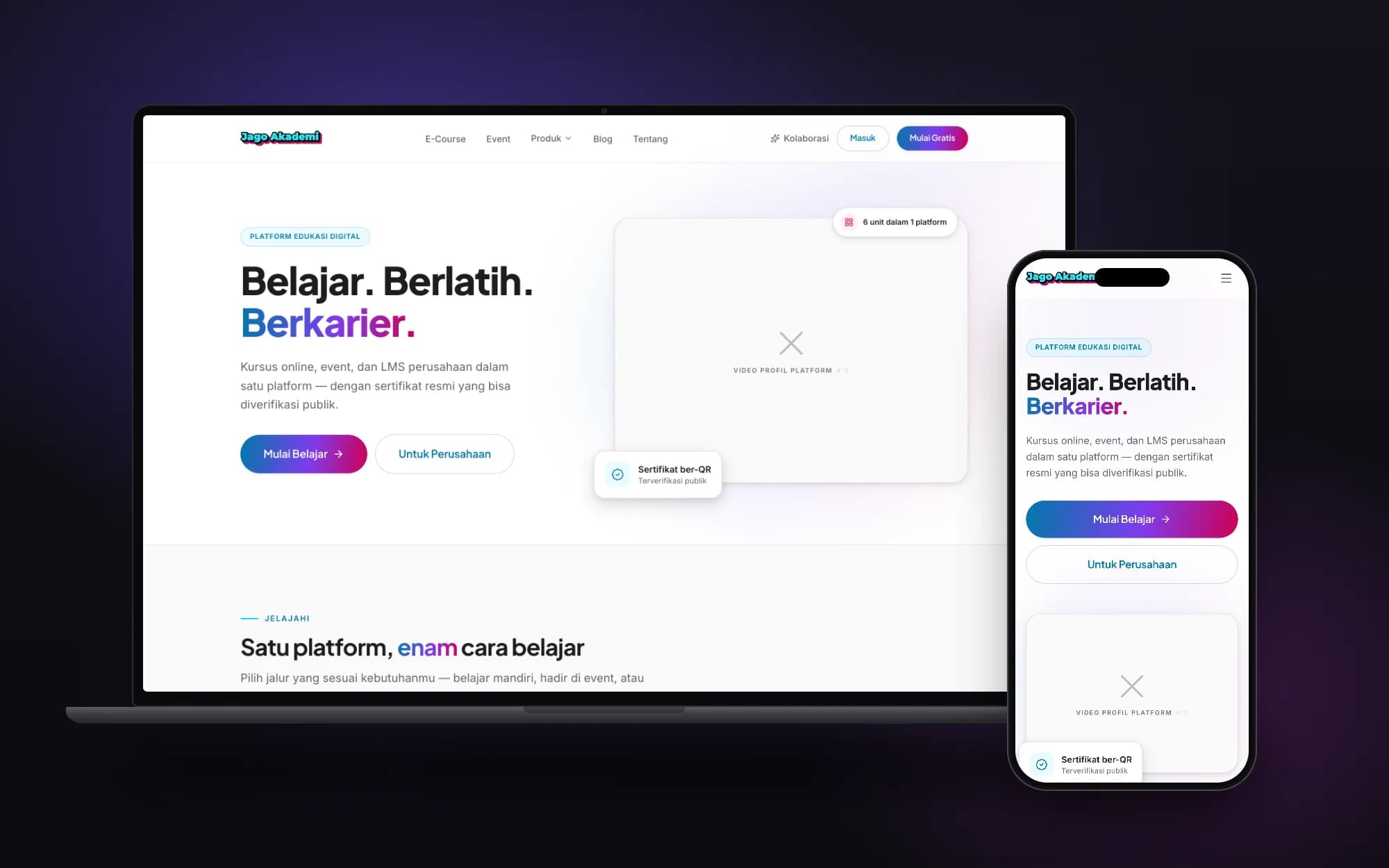
The public site for Jago Akademi, an Indonesian learning platform that sells e-courses, events, e-books, and a B2B learning management system. It serves individual learners and companies training their teams from a single homepage.
Context
Jago Akademi describes itself as an Indonesian digital education platform built around six units: e-courses, events and workshops, e-books, a corporate LMS, a trainer program, and a materials marketplace. Its courses are sold with a one-time payment and issue QR-coded certificates that anyone can verify. At the time of capture the platform was preparing to launch and invited visitors to join its first early-access cohort.
The challenge
Six products aimed at two very different buyers can easily turn into a confusing homepage. An individual looking for a course and an HR team evaluating an LMS need different information and different next steps. The platform was also new, so it had no catalog depth or alumni to point to yet. The site had to explain the offer clearly and give each visitor one obvious place to start.
- Separate entry points for learners and companies
- Verifiable certificates as a trust signal
- One-time payment as a clear differentiator
- Early-access list before the catalog launch
Approach
How it came together.
- 01
Split the hero into learner and company paths
The hero carries two calls to action, Mulai Belajar and Untuk Perusahaan, so individuals and corporate buyers branch off on the first screen. The headline (Belajar. Berlatih. Berkarier.) stays short and leaves the detail to the sections below.
- 02
Grouped six products into one scannable grid
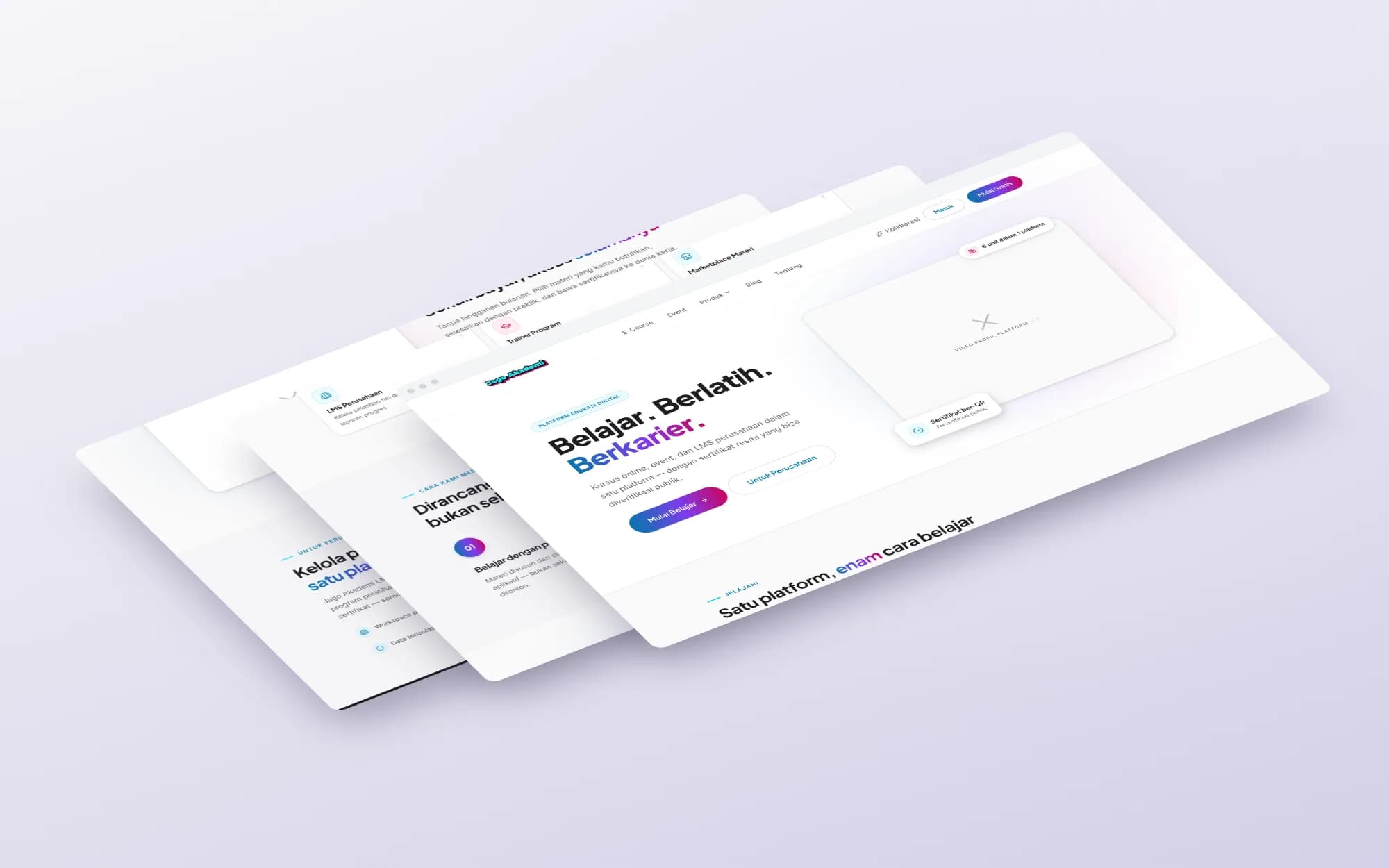
The Satu platform, enam cara belajar section gives each unit a card with an icon and a one-line description. On mobile the cards stack into a single column, so the full range reads in one scroll.
- 03
Turned the teaching method into three numbered promises
Practice-based material, a practitioner-led curriculum, and measurable results appear as numbered points. Each one ties back to something concrete, such as worksheets or the QR certificate.
- 04
Gave the corporate LMS its own section
Companies get a dedicated block covering workspaces per division, a progress dashboard, data isolated per company, and a free trial with no credit card. It links to the LMS packages and to a consultation, so buyers never have to go through the course flow.
- 05
Closed the page with an early-access sign-up
Because the catalog had not launched, the final section asks visitors to register for the first cohort or start with a free class. This collects interest now without promising content that does not exist yet.
- 06
Organised the footer into learning, programs, and company
Deeper pages such as the course catalog, free classes, subscription, affiliate program, and LMS packages sit in three footer columns. Secondary products stay reachable without crowding the main navigation.
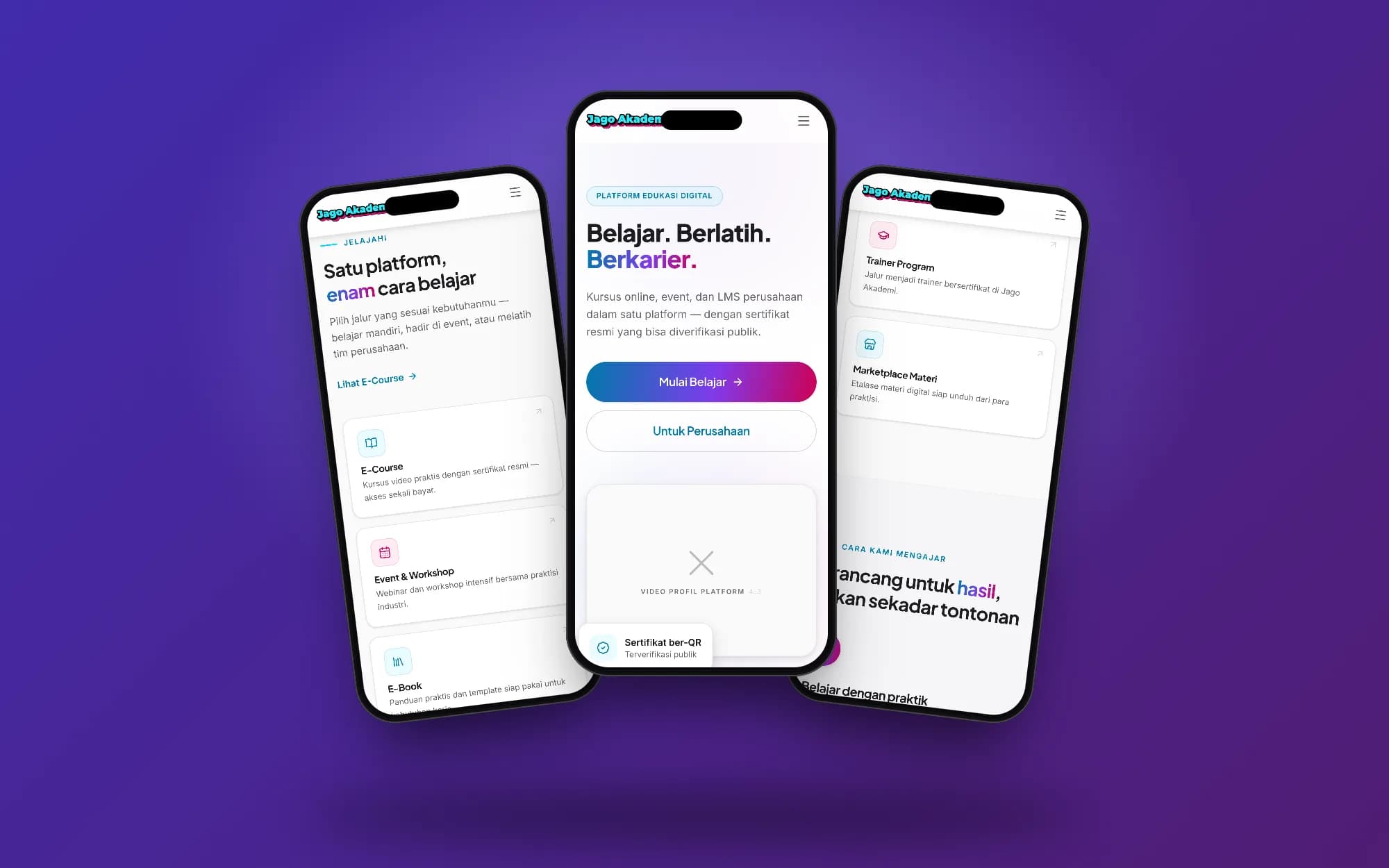
What was delivered
- Homepage with learner and company entry points
- Six-unit product overview
- Corporate LMS section with trial call to action
- Early-access sign-up section
- Header navigation with product dropdown
- Footer sitemap for catalog, programs, and company pages
What changed
- Jago Akademi can present six products without splitting them across separate sites
- Corporate buyers reach LMS packages and a consultation without passing through the course flow
- The team can collect early-access sign-ups before the catalog is complete
- Certificate verification is visible as a reason to choose the platform
Full page
Hover the window, or focus it with the keyboard, to scroll through the whole page. On touch screens, scroll inside it.
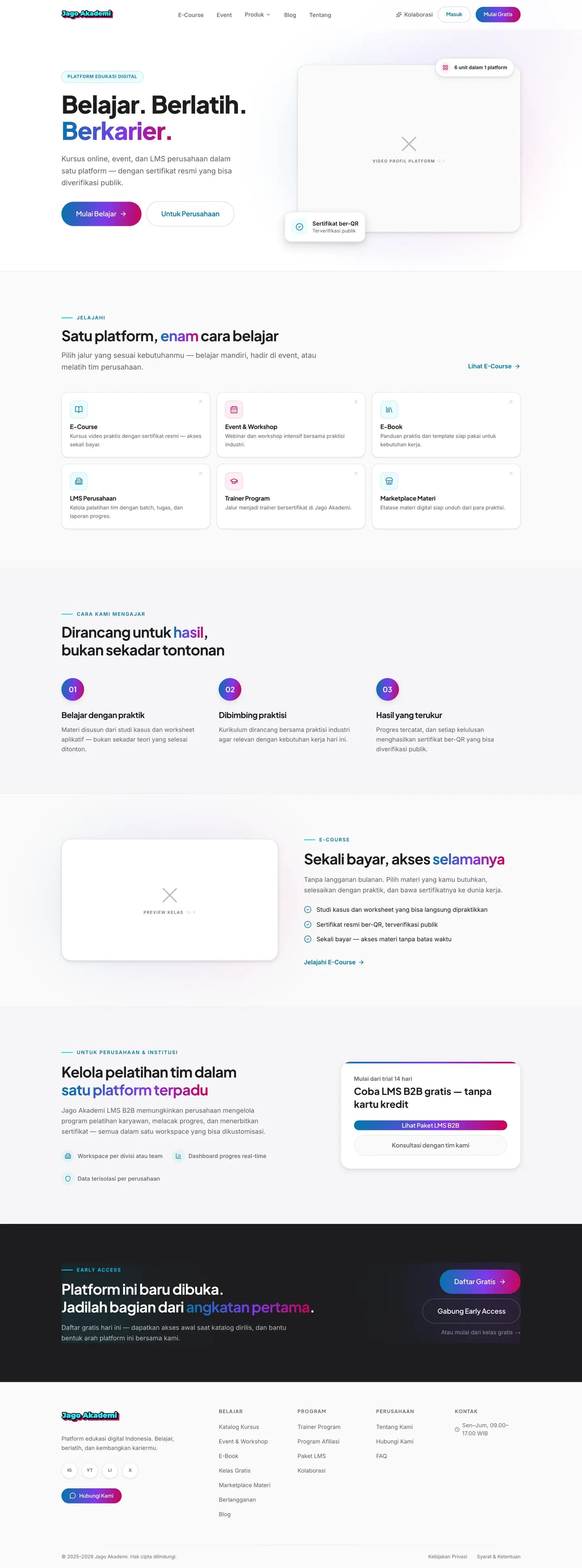
Launching before the catalog exists means the homepage has to sell the structure and the promise, so the early-access ask matters more than any feature list.